Tag Archives: self-publishing

Editing: The Big Bad Wolf

Working with an editor can be scary.  What if they don’t like it?  What if the editor changes the story?  Will they really understand you and your book?  How expensive is it?  Will you get what you pay for?  What is the difference between proofreading and content editing?   (BTW – these are all good questions to ask your editor directly when getting an estimate.)

As an author, you have a vision. You have a unique story to share.  As a self-publishing author, you have the choice of whether or not to work with a professional editor and who that editor will be.  And I cannot stress the importance of a professional edit!

The editor’s job is to recognize your strengths as an author and help you use those strengths to reach your target audience. This can be anything from fixing grammar to helping develop more content in specific chapters (Outlined in the Levels of Editing below). Some editing, like Content and Developmental editing, requires more than one round of editing and includes a dialogue between the author and editor.

No matter what the editor may suggest to you, it is your manuscript: you decide whether to accept or reject suggested alterations. A good editor will provide you with a 4-5 page sample edit, and some feedback about how and what they believe your manuscript needs along with a quote. At the bare minimum, it is good to at least get a sample edit done before publication so that you know how your manuscript will be perceived by your audiences.

Levels of Editing

1)      Proofread/Verification Edit

  1. What: Spelling, grammar, format/style (MLA, APA,      Chicago, AP)
  2. Where: Line by line
  3. Description: A proofread/verification edit is a basic edit. This service is for an author who is only concerned with their      manuscript being functional for publication. This service is also used as a polish for more thoroughly edited manuscripts.

2)      Copyedit

  1. What: Proofread + syntax, word choice, clarity, consistency, logic
  2. Where: Paragraph-Chapter
  3. Description: Copyediting is a mid-level service that is ideal for authors who are only concerned with syntactic functions.

3)      Substantive/Content Edit

  1. What: Copyedit+ structure, content, voice, audience
  2. Where: Entire Manuscript
  3. Description: In Substantive edits, we delve deeper into the text looking at semantic and pragmatic functions.  This type of editing includes comments and reviews of the text in relation to the overall context.  Substantive editing frequently necessitates 2-3 rounds of editing between the author and editor.

4)      Developmental Edit

  1. What: Substantive edit + content development
  2. Where: Manuscript and beyond
  3. Description: Developmental editing either begins with a known unfinished manuscript or is bred out of a Substantive edit. In a developmental edit, the author and editor work on developing content, rewriting sections and improving the overall structure of the manuscript.  This service requires a minimum of 2 rounds of editing.

Cost

The cost will vary depending on level of edit and the editor. Some editors charge per page, per word or per hour.  I have seen edits range from $2-$5/page.  I would suggest a per page estimate because some editors may be slower and take advantage of the per hour estimate.  This way you have more of a handle on the bottom line at the end of the day.

Contact

A good editor friend of mine helped to put this blog together.  I have worked with her professionally over the last year and she has proved to be very efficient and a great editor too many of my authors.  If you would like to reach out for an estimate or a sample, please contact Ciara Brewer at arseditio@gmail.com.

Check out my previous blogs on press releases and working with a printer.  If you are not following, just click the follow button on the right hand side to be emailed when new blogs are posted.   If you are interested in being a part of the Author Interview Series, please email me at jill@mirabooksmart,com

As always, I appreciate any comments, suggestions or feedback. If you have a blog topic you want me to cover – send it over.

…and in case I don’t see ya, good afternoon, good evening, and good night.
 

2 Comments

Filed under Book Layout, Self Publishing Author

Word on the Street with Michele Hinton

Through my years in publishing, I have worked with some really great authors. All of these authors approach self publishing with their own agenda and expertise. Since the whole point of my blog and book is to look at the reality of self-publishing, I thought it would be nice to do a series of author interviews. Welcome to ‘Word on the Street’.

My author interviews will consist of 6 questions about them, their book and their experience. You will get the good, the bad and the ugly. Not all real self publishing stories are full of rainbows and butterflies – it can suck sometimes too.

Tell us about it, Michele Hinton:

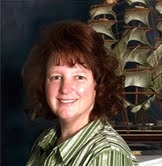
author photo
Real Answer Real Authors: Why did you decide to publish?

Michele: Being a new and unknown author, I tried for years to find a traditional publisher or agent for my manuscripts. Twenty years ago, vanity presses were outrageously expensive (I’d received a quote for $40,000.00 from one of them), so my work gathered dust in a drawer. Six years ago, I rediscovered print on demand publishers and gave it a try. It is still expensive, but a far cry from 20 years ago. Two of my novels became available through different websites, however, book stores would still not carry them on their shelves. That’s when I decide to publish my work on my own. I could format my own books and sell them through different venues on-line. I then decided that other new authors might be in the same boat that I was, so I expanded on my thoughts and now offer to publish the work of others (who are unable to publish on their own) as either ebook or paperback and distribute where I can without the high price charges that some of the major POD companies charge. I only charge when a book sells and then I split the royalties with my clients after expenses, which in some cases might be more than the 8% to 10% that traditional publishers would pay.

RARA: What titles have you published to date?

Michele: Books in Print written by Michele L. Hinton:
High Seas: The Cabin Boy
High Seas: A Matter of Blood
Tales with a Twist & Tales Totally Twisted
The Sin-Eater’s Daughter
Princess Courtney and the Magic Suit
Humpty-Dumpty: A Fractured Tale
Michael Smith (ebook only)
Joshua Pennwrite: Ghost Writer (ebook)

Books Written by my clients :

Beauregard Blue by Betty J. Rees
Bring Me a Blue Bird – by Brian Durski
Winds of Sand by Brian Durski
The Four Year Hitch by Roy Reichelt, Jr. (Coming Soon)
Dontay’s Alphabet Book of Color by Evelyn Hall
The Masks We Wear by Stacie Cooper
Secrets of Asian Women by Crystal Tai
A Field Where Memories Grow II by Joyce Lawhorn
The Confidence Box by Roy Reichelt, III
Poetry for the Mind by Debra Stephenson
The New Order by Charlie Thrun

Plus more

RARA: How are you currently marketing your book and what has given you the best results?

Michele: I’ve tried several local outlets: newspaper advertising, TV/website ads: Facebook; I have a book trailer for my book, The Sin-Eater’s Daughter;book fairs and events. Trying to find the right marketing tool is an uphill struggle with a limited budget.

RARA: Are there any books or websites that you have found the most useful?

Michele: Amazon Kindle has been my best venue, and I’ve had some sales through Smashwords as well as my own website, http://www.theseashellbooks.com

RARA: What has been your greatest challenge in self publishing?

Michele: The major challenge in self-publishing is finding a distributor that will be able to put books on book store shelves. Thus far, I am finding that unless you have hefty sales and a large bank account, finding a distributor or even getting into a major database is just as difficult as trying to find a traditional publisher/agent.

RARA: What is the best advice or tip you can give a new and aspiring author?

Michele: If you love to write, keep doing it. Have an open mind to suggestions made by other writers. You might find their words helpful. In these days and times, if you can’t find traditional means of publication, do it yourself. If you don’t have the technical skills to do it yourself, there are publishers out there, like me, who can give you a chance for your work to get out there.

AUTHOR BIO

Michele Hinton was born in Louisville, Kentucky and now resides in Bowling Green. She was married in 2007 for the first time at the tender age of 50. She holds a 4th degree black belt in Taekwondo and taught for many years (retired). Currently Michele is working on her Bachelor’s Degree and is expected to graduate in Oct. 2013. She won awards for her poetry from Mid-Continent University’s creative writing competitions. This year she won 1st place for her poem, Nature’s Serenade and will have several other poems published in their review magazine this year. Michele also started her own publishing company in 2008 and caters to the new author.

“Writing is my passion,” Michele says. Her newest books are The Sin-Eater’s Daughter, a novel, and a fully illustrated children’s book, Princess Courtney and the Magic Suit. Within the next few weeks, she will be launching an autobiography by Roy Reichelt, Jr. entitled, The Four Year Hitch on her website, www.theseashellbooks.com and it will also be available on Amazon and through Smashwords.

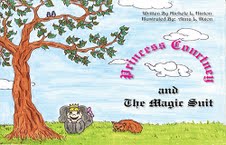
cover photo


Leave a comment

Filed under Book Marketing, Book Media, Self Publishing Author

Word on the Street with Bob Megantz

Through my years in publishing, I have worked with some really great authors.  All of these authors approach self publishing with their own agenda and expertise.   Since the whole point of my blog and book is to look at the reality of self-publishing, I thought it would be nice to do a series of author interviews.  Welcome to ‘Word on the Street’.

My author interviews will consist of 6 questions about them, their book and their experience.  You will get the good, the bad and the ugly.  Not all real self publishing stories are full of rainbows and butterflies – it can suck sometimes too.

Tell us about it, Bob Megantz:

IMG_0248

Real Answer Real Authors: Why did you decide to publish?

Bob: I am a musician and audio engineer, and I have a great interest in tube guitar amplifiers.  I found no reliable, accurate information in published books or magazines on the topic.  In fact, I found lots of misinformation, so I wanted to produce a clear, correct, and concise resource for interested musicians and equipment designers.

RARA: What titles have you published to date?

Bob: Designing and Constructing Guitar Amplifiers. This is the only self-published book I have written.  Two other books I wrote (How to License Technology and Technology Management: Designing and Implementing Effective Licensing Programs) were published by Wiley.

RARA: How are you currently marketing your book and what has given you the best results?

Bob:  I currently sell directly from my Web site and through Ebay, and indirectly through several vendors and through the Amazon Advantage program.  Most of my books are sold through Amazon.  I advertise in two guitar-related magazines (Guitar Player and Vintage Guitar), and participate in several related forums.

RARA: Are there any books or websites that you have found the most useful?

Bob:  Several useful related resources are listed in the bibliography.  There is a great deal of useful information on this topic available on the Web.  If you are referring to resources useful in marketing my book, Amazon has been the most useful (and also takes the biggest cut).

RARA: What has been your greatest challenge in self publishing?

Bob:  Fulfillment.  While fulfillment services are available, they are expensive (and labor-intensive), so I have been handling fulfillment myself.  I make many trips to the PO.

 RARA: What is the best advice or tip you can give a new and aspiring author?

Bob:  Write about what you love.  Don’t worry about commerciality while writing.  I say this because writers will in all likelihood gain modest (at best) financial rewards.   Figure out for whom you are writing, and ways to contact those people.  If you want to sell books, promote and advertise. The world will not beat a path to your door.

AUTHOR BIO

I’ve been involved in music and electronics since the 60’s, when I electrified my ukulele.  My parents had a Magnavox record player, whose ceramic cartridge plugged into the amplifier via a RCA jack.  I bought a contact microphone from the local electronics store, attached it to my ax, plugged in to the Magnavox, and counted off “Memphis.”

That seemed to get my parents’ attention, so they bought me a Heathkit shortwave radio kit for Christmas, along with a Weller “pistol-grip” soldering iron.  I assembled the radio, attached the antenna, turned it on, and it started howling.  I couldn’t get it to work right until I resoldered every joint in the radio.

By this time we’d moved to Jersey, and I started buying my own equipment.  First up was a Lafayette amplifier, which, if I recall correctly, used two 6BQ5’s in its push-pull output stage.  I connected the amplifier to the 12” speaker in the console TV in my bedroom, and plugged my uke into the phono input.  I had no idea why it sounded so bassy…

I upgraded to electric guitar in ’67, when my folks bought me a used Fender Jazzmaster.  I joined a band with my friends, but I needed an amp, so I emptied my savings account and bought an Ampeg Gemini II at the local music store.  Luckily, it included the dolly, since I had to push it all the way home.

I took that rig to Cornell University, where I studied Electrical Engineering, including a couple of courses on electronic music taught by Robert Moog.  I also took every music class I could, and worked part time as an electronics technician at the Cornell Synchrotron.   My guitar never sounded quite right to me, so I started by changing the speaker in the amp, and then, in ’70, I sold the Jazzmaster and bought a Gibson ES-335, which I still play today.   The Ampeg went next, first for a Marshall Major, then a long string of other amps.

After graduation I headed out to Santa Barbara, where I worked for a couple of years testing integrated circuits for Burroughs.  I was still playing in bands, and I started building my own equipment, both amps and speaker systems.   I then moved to San Francisco, where I eventually ended up working at Dolby Laboratories as an audio engineer.   I learned much of what you will read in Chapter 1 at Dolby.

In the last decade or so I have been taking a more orderly and comprehensive approach to amplifier design.  I began, like most designers, by repairing and modifying various Fender, Ampeg, Marshall, and other designs.  Later, I began constructing new amplifiers, first using existing units, such as Fender Bassmen, as platforms, and then designing and constructing all electrical and mechanical parts of the amplifier.  Each amplifier was used in performances with various guitars, speakers, and effects systems.

This experience has provided the basis for the book you are about to read.

BOOKS AVAILABLE FOR PURCHASE

www.amazon.com

www.tactec.biz


Leave a comment

Filed under Book Marketing, Book Media, Book Printing, Self Publishing Author

Word on the Street with John Moore

Through my years in publishing, I have worked with some really great authors.  All of these authors approach self publishing with their own agenda and expertise.   Since the whole point of my blog and book is to look at the reality of self-publishing, I thought it would be nice to do a series of author interviews.  Welcome to ‘Word on the Street’.

My author interviews will consist of 6 questions about them, their book and their experience.  You will get the good, the bad and the ugly.  Not all real self publishing stories are full of rainbows and butterflies – it can suck sometimes too.

John Moore and I will be speaking at the O’Fallon Writers Guild Writers Workshop on Saturday September 7, 2013 starting at 8:00 A.M.  The event will be held at Lindenwood University Belleville Campus.  For more information on the event, click here.

….Come on down, John Moore

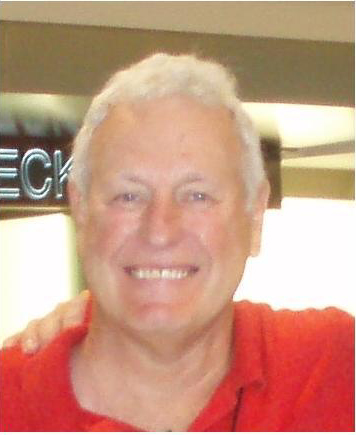
John Moore pic

Real Answers Real Authors: Why did you decide to publish?

John:  This is a bit of a long story; nevertheless it answers the question.  Several years ago, after my daughter divorced, I became a de facto father to my grandson who was twelve at the time.  Over the course of the next few years, I did my best to help him straighten his life out and emphasize his education.   Starting Junior High he didn’t like English.  Even though he was good in math and science, writing and reading the English language seemed like a waste of time to him.  So, I looked for ways to subtly change his attitude.  One night when we were camping along one of the Missouri “float” rivers, he asked what kind of CDs I liked when I was his age.  (We’re fifty years apart in age.)  He was surprised when I told him we didn’t have such things then, along with a lot of other things that are around now.  That discussion led to our contrasting a great many areas, then and now.  Then, I asked him what he thought would be different for his grandson fifty years away.  His imagination of the future was phenomenal.  Together we’d pick a subject—TV, world affairs, petroleum, war, lifestyles, etc.—and imagine what life would be when he had a grandson in fifty more years.  We began a list.  The list grew and we agreed to put it in a time capsule and open it in fifty years to see how right or wrong we were.  However, that wasn’t satisfying, nor did it do anything for his enthusiasm about English.  So, I suggested we work the material we’d listed into a short story.  It would be a story with his yet to be born grandson as the hero.  I wrote some and he wrote some and what started out to be a short story got longer.  In fact, it became a novel, which we self-published.  My family nick name is Poppies, so he thought that would be a good name to be called when he become a grandfather too.  So the title of the story became, “A Journey with Poppies.”  It is a story of him and his grandson fifty years into the future.  When he went into Eighth Grade, he felt a lot different about English.

RARA: What titles have you published to date?

John:  A Journey with Poppies, The Head of Khalid Salaam, Frigby’s War.

RARA: How are you currently marketing your book and what has given you the best results?

John:  I have tried book signings, e-mails to friends and family, meeting with book clubs, advertising on Web Sites related to the book, word of mouth, and prayer, hope, and hand-wringing.  Some work.  Some don’t.  Unless lightning strikes, most self-published authors struggle to earn back what they paid to publish.

RARA: Are there any books or websites that you have found the most useful?

John:  Not really.  However, I believe there is a business out there for someone with the savvy and audacity to take self-published books and market them.  Too many self-published authors are reluctant to spend the time and/or endure the pain of rejection to market their stuff.  If it is truly blither, it won’t sell no matter how skillful it’s marketed.  However, a third party not emotionally involved with the title and with the experience and moxie to push it on to the reading public (targeting the right sector) could be successful.

RARA:  What has been your greatest challenge in self publishing?

John:  You can guess from the above.  It is marketing my work.  I enjoy the writing; even the proofing.  However, when it comes to my own creation, I’m a reluctant salesman.  I believe I’m not alone in that respect.

 RARA: What is the best advice or tip you can give a new and aspiring author?

John:  Expect to work as hard at promoting both you and your book as you did writing it.  It’s a jungle out there and survival of the fittest is the rule.  Being fit in the writing business means (1) cranking out a well-written product about a subject people are interested in and (2) becoming the epitome of the door-to-door sales person who won’t take no for an answer.

AUTHOR BIO

Twenty-eight years spent in the military during the prime of life cannot help but influence one’s ideas and opinions on everything from national defense to how people are treated.  I didn’t start out to be a career military officer.  It just sort of happened.  Coming from a lower middleclass background, the opportunity to attend a service academy solved the problem of how to pay for a college education.  A subsequent graduate degree in engineering added to my commitment to the Air Force, so by then I was hooked.

Through it all, however, the pressure to be a good soldier was always pitted against a renegade attitude which was sometimes suppressed, but more often not.  Growing up in the Midwest, I blended the solid WASP values I learned from my family and friends with the melting pot of attitudes and conduct I found in the military.  Following my military career, I saw the other side of the coin by spending fourteen years in a private sector engineering firm.  The result is that I am somewhat of a hybrid—neither a straight-laced, conservative, retired military officer nor am I a laid back, liberal Midwesterner.  I have read On War by Clausewitz but I prefer Canterbury Tales by Chaucer. Writing came along in my life well after my two engineering careers had faded into the sunset.

I write because I enjoy the challenge of telling the story and revel in making it all come together.  So, while I have paced the agitated halls of the Pentagon, I prefer a solitary stroll on the beach.  I have seen the fervor and excitement of battle but it pales in contrast with the glimpse of a newborn baby.  I write because there are stories that need to be told. Those who knew me once might say I have mellowed some.  They would be right.

John Moore                                  

918 Indian Springs Road

O’Fallon, IL 62269

killermoore@aol.com

618-632-6575


BOOKS AVAILABLE FOR PURCHASE AND REVIEW

A Journey with Poppies – Available as an e-book at Authorhouse.com

The Head of Khalid Salaam – Available in paperback or e-book at Authorhouse.com

Frigby’s War – Available at Createspace.com/3563818, Amazon.com, and Kindle.


Leave a comment

Filed under Book Marketing, Book Media, Self Publishing Author

Still Don’t Have An eBook?

eBooks/Readers/Files

When I started working in book publishing, eBooks were not around just yet.   When they did come around, everyone was very curious and maybe a little scared (especially those who rely on people buying print!).   What exactly is an eBook and how is it different than a regular digital file – like a pdf?

Well, first off – eBook is short for ‘electronic book’.  You would create an eBook to be read on electronic devices like computers or eReaders (Kindle, Nook, iPad and so on).   This works best with text based documents.  The conversion basically puts all this text into one seamless page.   Your end user will have the freedom (on their reader) to adjust the text to their liking – big, small, blue, whatever.

You can have a document with charts, graphs, images etc converted to an eBook file too.  These elements are usually captured as a ‘flat image’ in the document.   This is to prevent things from being jumbled on a reader.  For instance, a chart has to be an ‘image’ otherwise it will look all funky when someone is minimizing or maximizing on their eReader screen.   You don’t want loose text in the chart just running all over the page and looking wonky – now do you?    Jumbled, Funky, Wonky = BAD.

When eBooks started to gain popularity, everyone wanted to invent an eReader device – it was the hot new item.  This caused a problem because they all required different formats – which was a super PITA when trying to do the conversion on your book.  For instance, you couldn’t open the same file on an iPad as you could the Nook.  Eventually, everyone got smart and the ePub file emerged as the universal format to these readers.  Except for Amazon of course…  They like to be special and require their own format – mobi.

Conversion/Distribution

There are companies out there that can do the conversion for you.  You provide a file (like a word or pdf) and they will send you the ePub and Mobi format – for a small or large fee.  Your price will depend on how many pages, images, links etc – basically the complexity of the book determines the price.   I had my conversion done by www.eBooks2go.com.    If you have a more complicated file, it would be best to let a professional handle this for you.  They will create a nice TOC and have everything link back and forth and make the eBook file very user friendly.  Professionals like eBooks2go also offer distribution to various online stores like Amazon, iTunes and B&N.

For the sake of comparison (and for my blog), I tried Smashwords to convert as well.   An author mentioned Smashwords in my book and once I learned more about it, I was intrigued – mostly because of their distribution options.   I was not too impressed with the look of their website.  It is very easy to navigate and self explanatory but it was a bit plain and ho-hum.   The creator of Smashwords also published books relating to the site.  These books are tutorials on using the site to the full extent, setting up files correctly and marketing your book through Smashwords – genius.

Anyway, this site has a free converter.   I would only recommend this for basic docs with just text.   Although the conversion is free, it can garner up some frustrations.  I have my doc uploaded to their site now and it is currently being ‘reviewed’ for their premium catalog.   The premium catalog consists of numerous distribution channels and libraries.   This is what I find fascinating about Smashwords.  The more wheels you have out their cranking away, the better – especially with little to no effort from you (the author).  Some people call this lazy, I call it efficient.   You want to have as many channels as you possibly can feeding the beast because that is what it’s all about – exposure and sales.

Pricing

Many people ask me what to price their book.  Honest answer – I have no idea.  It is up to the author to research similar books and see what people are paying and why.  Always leave room for discounts and promotions to build interest and always have a call to action (2 days only – 25% off).   On Smashwords, you have a personal dashboard and can add coupons and do sampling.  A sampling would be letting people download 15 or 20% of the book at no cost.  This can get them to buy the book when they otherwise would have not.  It is a good idea to play around with this and see what works.  I will have mine on Smashwords for 99 cents at first.   Personally, I will always buy something I find the slightest bit interesting when it is just a buck – most other people will too.  It is much easier to get $1 from 5000 people then $10 from 500 people.

Unfortunately, everyone will want a piece of the pie and why not – you are using these channels to sell the book so they want a cut.   And yes, they are all different.  Here is an example of some fees.  The company distributing it (like Smashwords or eBooks2go) will also take 10-15% for managing the accounts.  Not a bad deal really when you do nothing.  Hopefully it results in a check coming to you every quarter.

           Amazon B&N Apple
$1-2.99  65%   60%   30%
$3-9.99  30%   35%   30%
$10-199 65%   60%   30%

As a publisher, it is important to provide your readers with options.   The printed book will never go away but the younger generations are all about the devices now.  I can’t really judge – we have plenty lying around the house too.

Check out my previous blogs on press releases and working with a printer.  If you are not following, just click the follow button on the right hand side to be emailed when new blogs are posted.

As always, I appreciate any comments, suggestions or feedback. If you have a blog topic you want me to cover – send it over.

…and in case I don’t see ya, good afternoon, good evening, and good night.
Leave a comment

Filed under Book Marketing, Book Media, Distribution, eBooks, Self Publishing Author

Write Naked: 200 Words with Jill Mettendorf

What a great name for a blog: Write Naked. Of course, you may get too many other kinds of internet searchers with a name like that. LOL. Anyway – I like it.  But to get to the point – this is my first interview, yay!

The author of the blog came to me about a year ago and inquired about publishing and printing through Mira at http://mirabooksmart.com.  Since then we have worked together on a couple of projects.  I had told her about my book and hence – the first interview was born.  Click here to read: http://writenaked.wordpress.com/2013/08/01/200-words-with-jill-mettendorf/

Happy Friday!

Leave a comment

Filed under Book Marketing, Book Media, Self Publishing Author

The Nitty Gritty on Press Releases

So now that my book will be launching very soon (August 1), I need to let everyone know about it.  How do I write the release?  Who is going to care about my little book?  Where do I send it?   Well, as it turns out – there are tons of places to send it…and for FREE!   Did I mention FREE!?!  I don’t know about you but that makes me happy.  I always stick to doing free first.  Make a few bucks and then look at investing it back into your business (your book).  I did quite a bit of research on press releases and found some good info and templates to help guide me.

WHAT?  A press release is an official statement of a news story intended for newspapers, journalists and other media.  The media uses this release and makes it known to the public.

WHO?  You – yes, you the author must do a press release.  You can also hire someone to do it and the cost could range from $100-500.  I think it is a good idea to have a professional review this for you.  Journalists will be turned off immediately if there are misspellings, etc. and it appears unprofessional.  At least have a professional editor take a glance.  Your printer usually has someone on staff or go to a local writing chapter.  There are ALWAYS editors there.

WHEN? It is best to distribute the release when the book is ready to launch and then periodically after that for more exposure.  Maybe re-write and try it again 2 months later.  Some would argue there is no good time of day but most of the research says that early in the week and early in the day. Don’t send at 8 am on weekdays – make it more like 9-10 am.  Your release will get lost in the email abyss if it is sent too early.   Don’t send over the weekend for obvious reasons.

HOW?  I discovered quite a few good samples and templates online.  There are 4 major parts of a release: 1) Headline, 2) Summary Statement, 3) Main Body, 4) Biographical Info.  I liked the simple layout of this template: Press-Release-Template.  Also search online for sample book press releases if you need to brainstorm and get ideas or motivation.

WHERE? Again, always start with free first but don’t think that quantity is better than quality.  No one wants to be a habitual spammer of releases.  Personally, I will send to all the free sites but then dig into local media and send to appropriate
sources and get the quality too.  This will take time and effort but will be worthwhile.  Tweak the release to fit the personality of different journalists, maybe a personal note as well wouldn’t hurt.   Let them know why the release is important to them – but only in 2-3 sentences (not paragraphs).  Plan to email this and put the release in the body.  Don’t attach a pdf.  Journalists will not open because of time and fear of a virus.  If you plan on faxing it then you need to put your floppy discs and Jane Fonda VHS tapes in the trash and join us in 2013.

Here is a list of places to start:

  1. Your website – FREE
  2. Local Newspapers/Radio channels – FREE
  3. PRLog.com – FREE
  4. Link to 50 other places to distribute release – FREE http://www.avangate.com/community/resources/article/press-release-distribution.htm
  5. PRWeb.com – NOT FREE (I did start an account to inquire and they have contacted me by phone and email since – good follow up.  Also heard they are good to work with)
  6. Mass Media Distribution – NOT FREE
  7. 24-7 Press Release – NOT FREE

WHY? Uh, so people know about your book and you sell more copies.  That’s pretty much it.

So in a nutshell….

DO’S

  1. Do have it edited or a professional help you.
  2. Do make it newsy – bring out the expert in you and be the source they need to talk to.
  3. Do send it out amongst all free release sites.  Also be specific and target certain journalists that will be prone to writing about your topic.  Tweak your press release to fit that journalist or publication.
  4. Do seek out newspaper/radio media – start with local media first.
  5. Do get to the point.  Keep the release brief and no longer than one page.
  6. Do follow a template to make sure your release is done correctly and you provide proper info.
  7. Do keep it in the 3rd person.
  8. Do try and try again.  Sending out releases is like going fishing – sometimes they bite and sometimes they don’t.

DON’T’S

  1. Don’t use crazy fonts.
  2. Don’t start release with headline in all caps/bold/underlined.  Capitalize the heading like you would a title for a book.
  3. Don’t send pdf attachment of the release.
  4. Don’t just send the release to any person you know with an email.

I hope that helps everyone with press releases.  It is not something you have to hire a big expensive PR firm to do.  It can easily be put together and be cost efficient.  It is an important step in self publishing your book and letting the public know.

Check out my previous blogs on prelaunch marketing, cover/manuscript setup and working with a printer.  If you are not following, just click the follow button on the right hand side to be emailed when new blogs are posted.

As always, I appreciate any comments, suggestions or feedback. If you have a blog topic you want me to cover – send it over.

…and in case I don’t see ya, good afternoon, good evening, and good night.

9 Comments

Filed under Book Marketing, Book Media, Book Printing, Self Publishing Author

Maximize Your Social Media – Easily

I know that I said the whole social media thing is a bit boring and a total time suck but I have been having some fun with it.  I think once you start to see results it gets you more excited.  You just have to get over the hump.

My first social media blog was about setting up basic accounts on Facebook, Twitter, LinkedIn etc.   I was getting distraught on the thought of having to post everyday and be consistent.  But then, along came Hoot suite.  I had heard of these social media ‘platforms’ and then started to really look into what they have to offer.   Let me just say – it is A-MA-ZING!

I researched a few of these systems and some are setup more for individuals.   Hoot suite seemed to be the best fit for me.  You can add all your social media streams (or accounts) and view simultaneously.  The program is free for up to 5 social media accounts – so you can do Facebook, Twitter, LinkedIn, Pinterest and one more for no monthly charge.  I am a member of quite a few author groups on Facebook so I upgraded to 9.99/month pro plan to have 50 social media ‘accounts’.  Each ‘group’ I belonged to on face book counts as 1 social media ‘account’.

When I posted a blog, I found myself going to each group on Facebook, then my Twitter, then my LinkedIn, etc.  This was very time consuming and I would end up getting distracted with screaming children in the process.  Well, the most awesome thing about Hoot suite is that you can compose a message (or blog, whatever) and include all (or some – your choice) of your social media accounts and post to them at one time.  And get this – you can SCHEDULE the posts too. This is what gets me so excited (I know I am kind of a loser if this makes me excited, but anyway…).  Anything that helps me manage my time better I absolutely love.  So now on the weekend I will get all my posts for the week and schedule accordingly.   You can be more consistent and almost tell a story with your posts.   The best time to post is between 10am-2pm so just schedule them for that time of day.

Hoot suite also features reports and analytics.  Once you really start to get some traction, these tools are super helpful.  They will help to show trends, what links are being clicked, what messages get the most views, etc.  It is nice to start seeing results and feel like the time you are spending engaging with your social media is really paying off.  This program helps to put everything right in front of me so I give it 2 thumbs up.

Check out my previous blogs on prelaunch marketing, cover/manuscript setup and working with a printer.  If you are not following, just click the follow button on the right hand side to be emailed when new blogs are posted.

As always, I appreciate any comments, suggestions or feedback. If you have a blog topic you want me to cover – send it over.

…and in case I don’t see ya, good afternoon, good evening, and good night.
 

Leave a comment

Filed under Book Marketing, Self Publishing Author

Working with a Printer can Suck

Yes, I work with a printing/publishing company and have for 7 or so years.  I think of all my blogs, this one I can really give my two cents on and feel more like the ‘expert’.  However, I can still empathize for my authors because printers can be tough and very hard to understand.  I get it ….and hopefully you will too once you read my blog.

The very first thing(s) you need to decide are the following:

  1. Budget – how much money do you have to spend and have you really thought about all the expenses (setup, editing, proofing, printing, shipping, marketing materials….)?
  2. Commitment – is this something that you want as a side gig to show a few friends or do you plan to hit it pretty hard with signings, speaking engagements, marketing, etc?
  3. Expertise – how much do you really know about marketing your book?
  4. Motivation – have you had your towels in the washer for 4 days now?

There are different types of printers as well and they all serve different purposes:

  1. POD – This stands for print on demand.  Digital printing equipment is used.  Digital printers are just fancy copiers with way more bells and whistles.   It is awesome that people can print just one book at a time these days – who would of thought.  POD printers are normally all online.  You do not usually get to speak to a live person.  They can often be higher in price and there can be limitations on what you can do.  You will get super frustrated with POD if you are unfamiliar with getting files ready to print and if you are not too computer savvy.  POD is great if you are the type of person who gets things done at 3am and you know what you are doing.
  2. Short Run Digital Printing – POD also uses digital printing equipment but there are companies that specialize in more of the ‘short run’ digital printing.  These are the mid-level market guys and are perfect for first time authors.   Short Run Digital Printers require a minimum order of books like 25 or 50 and will print up to 500 efficiently.  They can usually give you a better price per book since you are ordering more than 1 at a time.  You will have a more personal connection to the company.  They will review the files and come back to you when there are issues and some setup is required.
  3. Offset/Traditional Publishing – this type of printing is only efficient for runs of 1000+ typically.  This is the old timey method where plates are made and the plates ‘stamp’ the paper.  Offset printers use ink.  Digital printers use toner.  Most people don’t care about this but some do.  The presses take time to setup which is why it does not make sense to do a short run.   You will still get a personal connection with the company.  You will receive a much lower cost per book.   They will also review your files and come back with any issues, etc.  This is what authors will graduate too once they are successful in marketing their book.  Just be sure and have space for storage.  A good space that is BIG and not damp or humid – 1000 books can be like 30-40 boxes.  That’s a lot of boxes.

So once you have decided on the above you want to start connecting with that type of printer for estimates.  Printing companies can be intimidating because we have our own language.  We start to throw terms out to you like perfect binding, duplex, trim size, bleed and you start to feel dizzy and want to hang up.  Personally, I can tell instantly if an author is new to the process by the first things they ask or say.  That helps me to steer the conversation in the right direction.  It will be important to connect to the sales person or printer so you fully understand what you are buying and they fully understand your expectations.  This can be difficult.  I would suggest the following:

  1. Review or google print terms you do not understand.  I have put together a list here: Printionary.
  2. Send or give the printer a physical sample of what you want.  This could be on paper type, a design, layout or binding style.
  3. Talk to more than one printer.
  4. Talk to other authors on their experiences.

When I gather information from an author to get an accurate quote, these are the specs I would ask for:

  1. Title of Book:
  2. Quantity to print:
  3. Trim size (height and width of finished book):
  4. Number of pages:
  5. Is the interior b/w or color:
  6. Any paper preference or standard:
  7. Binding style (click here for sample images)
  8. Will you require an ISBN or barcode:
  9. Do you need layout or formatting:

From this information, I can get the most accurate proposal together.  When you go to several printers for estimates, be sure and have the same specs quoted so you can compare apples to apples.  Granted, I do not believe that the lowest price is the best option.   When you buy cheap – you usually get cheap. There are many other things to consider like customer service, turnaround time, additional services available, location etc.

90% of files are sent incorrectly!  Ask the printer how they need files setup to print and what their process is.  Every printer should give you some guidelines on this.  I have attached a sample here: MIRA Preparing Files.   Authors often get annoyed when printers come back with issues and need to have them fixed or charge a small fee.  Unfortunately someone has to do the work and if they are on payroll – we have to charge the customer.   It can get rather expensive to make a lot of changes and send new files throughout the proofing stages.  All files have to be setup a certain way so to avoid extra charges – make sure you are at a stopping point.  The good thing about digital is you can print a small amount, find mistakes and correct them, and then print another small amount.

I hope that you have learned a bit about the ‘Other Side’.  Printers are not so bad I guess.  Check out my previous blogs on prelaunch marketing, cover/manuscript setup and social media.  If you are not following, just click the follow button on the right hand side to be emailed when new blogs are posted.

As always, I appreciate any comments, suggestions or feedback. If you have a blog topic you want me to cover – send it over.

…and in case I don’t see ya, good afternoon, good evening, and good night.


7 Comments

Filed under Book Printing, Self Publishing Author

Social Media – Not So Scary

Who would have thought that we would be able to video chat with friends across the world, become an instant celebrity through a YouTube video or broadcast our every thought and action to hundreds of friends online?  I know that was pretty cheesy – but I am talking about social media here folks.

In a recent post, I talked about how the last thing I really want to do with any free time (which there is none with a job, kids and now this book) is be on the computer engaging in social media.  Well, here is a breakdown of what I have done so far.  I am in no means calling myself an expert in social media because there are many gurus out there that can help develop many levels of social media for you.  The purpose of this is to talk about how a newbie like me gets connected.  Many of my authors have asked how to take the first steps so here goes:

WORDPRESS – First things first, if you are going to do any kind of social media you have to send them somewhere.  You need a home base.  This is what Word Press can do for you.  Easily create a simple or not so simple website and blog.  I have only 4 pages now and may add more in the future.  The most important to me was a home page (to introduce the project/book), a blog page, a contact page and a ‘buy my book’ page.  Word Press is free but you can upgrade for $18/year to have your own url otherwise it will contain’ Word Press’ in it.  For instance, my website is at www.realanswersrealauthors.com instead of www.realanswersrealauthors.wordpress.com.  I thought this was worth the money.  Word Press has a pretty extensive dashboard and lots of customizing you can do.  It is helpful with many links to guide you through setup.  Just try not to get overwhelmed.  Take a couple of days and just click through and see what everything does.  You don’t have to figure it all out day 1.

FACEBOOK – I assume this is the most common and widely used platform.  Everyone you know probably has a Facebook page – which you can now use to your advantage.  I started a page for my book and put the cover image as my profile pic.  I started to look into various groups that related to my book.  I found many author and book promotion groups.  I asked to join these groups.  Once you are a member, you can look to the right on their page and see ‘related groups’.  I then went through all related groups in each group that I was a member.  This really helped to open up my FB world.  Once I joined these groups, I started to get friend requests from authors and sought out friends who were authors.  This is how social media can snowball for you.  I would suggest seeking out groups that have a common interest with your book.  When I posted a blog, I was sure to share it on my Facebook page and also post it on various group pages that related to the particular topic.

TWITTER – I had always refused to join twitter and when I say the word ‘tweet’ – I want to kick my own a** but I guess I had to do it.  I signed up for twitter.  Basically what I do here is share my blog links when I post something.  I have also been trying to tweet (there I go again) every day.  I just take excerpts from my book and post.  The important thing with this and most social media outlets is that you want to have quality content to get quality followers.  If you don’t care then you will end up with a bunch of crap.  If you work hard and spend the time, just do it right.   Because of this, I get a steady stream of people following me.  I don’t have very many but get a few a week and I am okay with that for now.

LINKEDIN – This is more of a professional networking tool, so you should keep it that way.  No embarrassing photos or posts on what you had for breakfast.  This will turn people off.  I was not very good at keeping up with my account so when I logged in, I had about 90 invitations waiting.  Once I accepted the invites then LI asked me about all of these other people I may know.  They also have a nice feature for updating your profile as well.  It will ask if you want to update your profile info and then you will answer a series of questions – quick and easy.  LinkedIn is also a place where I will post my blogs or update on any work type activities like if Mira Publishing added a new product or if we have a print sale happening that month.

REDDIT, STUMBLE UPON, DIGG, TUMBLR and PINTEREST – These are additional social media platforms that all do about the same thing.  They are resources for information basically.  I opened an account for each of these sites and just post my blog.  I do not know all the ends and outs of each one but will be researching a bit more.   I have seen hits on my blog from each site once I post so I think it is definitely worth looking into.

Word Press is great because if you setup their ‘Publicize’ feature it will automatically post your blog in the various outlets for you.   I also think it is important to be consistent so keep the same profile pic and same color scheme throughout all your social media accounts.  This will help others to relate to you and will be more familiar with your ‘brand’.

Also, something big with social media is seeking out information from others that relate to your book/topic and engage on their posts or follow them.  This will help others to come around to you.  It is not just about you sending info out to everyone and expecting them to read what you have to say –  but you have to do the same and read and comment on others as well.  This, I find the most time consuming but necessary.

That is about all I have on social media.  I know there is much more that can be done but this is a good stepping stone.  I started my social media about 8 weeks prior to my book launch and will continue building through the months and years.  It takes patience and time so be prepared.

Check out my previous blogs on prelaunch marketing and cover/manuscript setup.  If you are not following, just click the follow button on the right hand side to be emailed when new blogs are posted.   My next post will be about printing and getting quotes.

As always, I appreciate any comments, suggestions or feedback. If you have a blog topic you want me to cover – send it over.

…and in case I don’t see ya, good afternoon, good evening, and good night.


6 Comments

Filed under Book Marketing, Self Publishing Author